
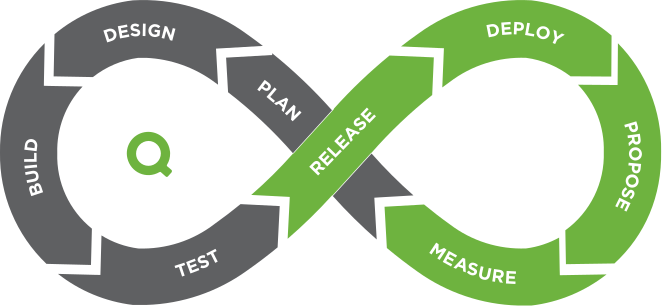
The Constraint Always Moves
The most expensive assumption in analytics is that a solved bottleneck stays solved. Theory of Constraints taught this on factory floors decades ago. ...


Data Fabric is a technology that offers a new approach to integrating data sources across platforms and business users while making data even more accessible, no matter where it is located. This technology makes it easier to access data within an organization, which in turn makes it easier to use the data in self-service mode. This architecture is independent of data environments, processes, and so on, providing end-to-end data management capabilities. Data Fabric also allows to automate the discovery, management, and use of data.
The main Data Fabric advantages:
The main goal of this technology is to combine data of different types with endpoints using semantic knowledge graphs, metadata management and machine learning. Thanks to this, it is possible to group related data sets, add new data sources to data ecosystems. This eliminates silos in data systems and improves data quality.
The use of Data Fabric architectures allows to create self-service applications. Thus, not only technical teams (data engineers, developers, analysts, etc.) have access to data, but also non-technical teams. This ensures higher productivity and helps to make better and faster decisions.
The data structure provides a more efficient data management process by offering a unified view of all data. This contributes to easier identification, tracking of data and efficient use of data in general.
Data Fabric allows to consolidate data on a single platform while reducing data management costs.
Advanced access to data should not cause data security risks. Additional security measures ensure the security of data and allow to customize the availability of certain data for certain roles. The use of Data Fabric architectures reduces the risks associated with data sharing.
The most expensive assumption in analytics is that a solved bottleneck stays solved. Theory of Constraints taught this on factory floors decades ago. ...
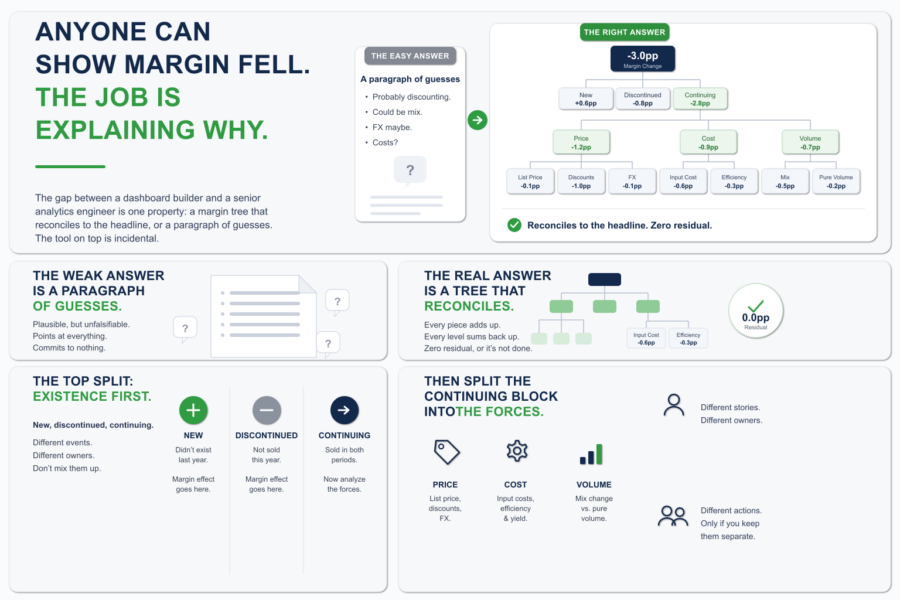
Margin is down three points. The CFO knows that already. The dashboard told them, the board deck told them, the number is not in dispute. What they wa...
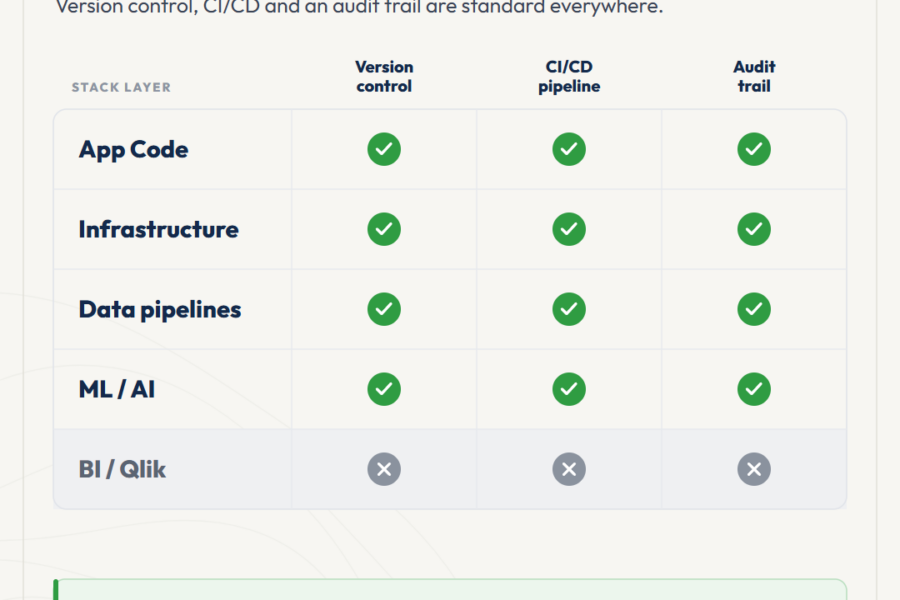
At some point, every BI team that grows past three or four developers hits the same moment. Deployment coordination starts eating senior time. Small i...


No comments yet.
Leave a comment