
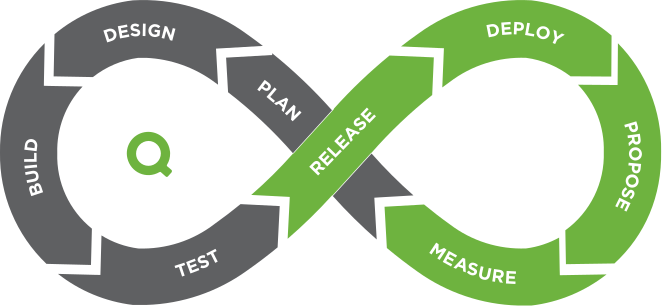
The Constraint Always Moves
The most expensive assumption in analytics is that a solved bottleneck stays solved. Theory of Constraints taught this on factory floors decades ago. ...


The transformative power of AI is driving its popularity of using. Every company of any size strives to use this technology and implement it in their daily activities. However, AI implementation can be quite a challenge that requires a strategic approach, planning, resources and a willingness to innovate. Below are the main points that will help to implement AI successfully.
First of all, it is necessary to determine clear business goals and needs. Understanding all current processes can easily answer the question «where, how and what processes can be optimized by AI». It is advisable to use this technology in order to automate time-consuming and repetitive tasks, make more efficient decisions and improve the quality of customer service.
The market has many AI solutions, including chatbots, natural language processes, machine learning, deep learning, etc. It is important to choose the right solution that meets the business needs. When choosing a solution, it’s worth exploring AI technologies and platforms and take into account scalability, flexibility, and ease of integration. It is also worth paying attention to the compatibility of the solution with the existing infrastructure.
AI uses large amounts of data to train and make predictions. Therefore, there should be a clear and understandable strategy for working with data, which includes determining the necessary data, determining how to obtain different data types, how to collect, store and access data, privacy rules for the data, responsible for storing data, how and why data analytics are used for information and trends.
The successful implementation of this technology requires a qualified team. This may include data scientists, machine learning engineers, data engineers, and subject experts.
To train an AI model, learn patterns, and make sound predictions, it is necessary to provide a comprehensive data set. Collaboration with data scientists and AI experts is also needed. This will help to develop and fine-tune the model to produce accurate and reliable results that are consistent with business goals.
Once trained and tested, the AI model can be integrated into business operations. During the integration process, it is possible to make some changes to existing systems and processes. Deployments should make an effort to minimize errors in existing workflows. It is also important to provide stakeholders with regular support and training. This will help successfully transition to AI-driven operations.
Regular performance monitoring and evaluation is essential to ensure that the AI model is working correctly and is performing well. It is worth identifying key indicators that can be used to measure the impact of AI on the company’s activities. Analysis of the results will help to identify problems and areas for improvement.
Like any technology, the AI model needs to be updated regularly. This is the key to maintaining a concrete business advantage. As the business changes and develops, it is necessary to make adjustments to the AI model. There are constant innovations in AI technologies and methodologies that can be added and applied. But before that, it is worth considering how and for what they can be applied. Revising and updating data strategy will drive business forward.
The most expensive assumption in analytics is that a solved bottleneck stays solved. Theory of Constraints taught this on factory floors decades ago. ...
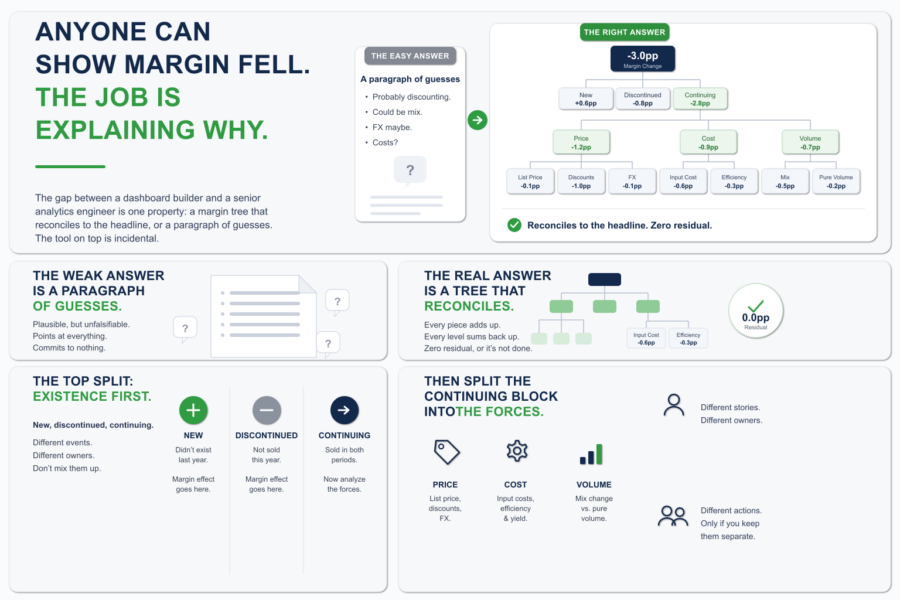
Margin is down three points. The CFO knows that already. The dashboard told them, the board deck told them, the number is not in dispute. What they wa...
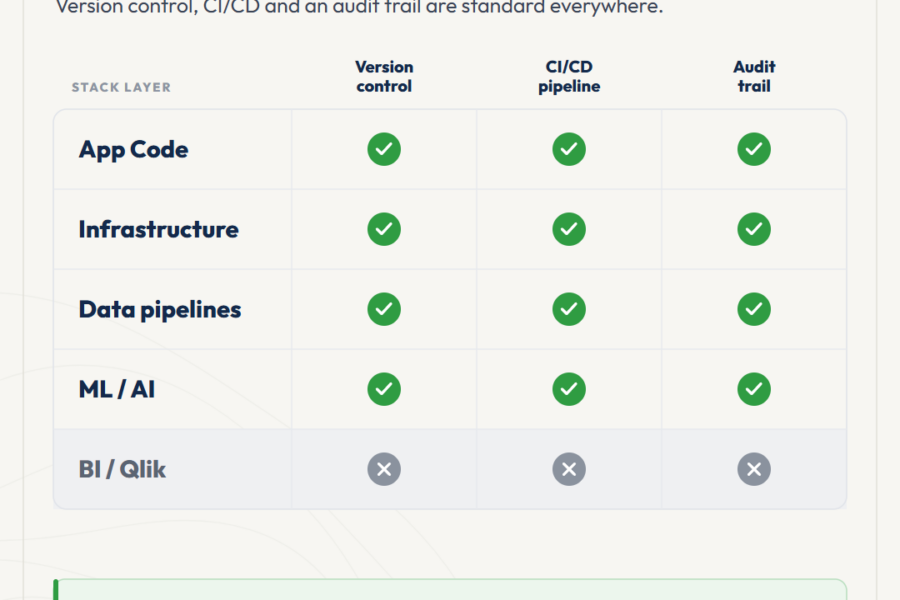
At some point, every BI team that grows past three or four developers hits the same moment. Deployment coordination starts eating senior time. Small i...


No comments yet.
Leave a comment