
Why Your Qlik Deployments Keep Breaking
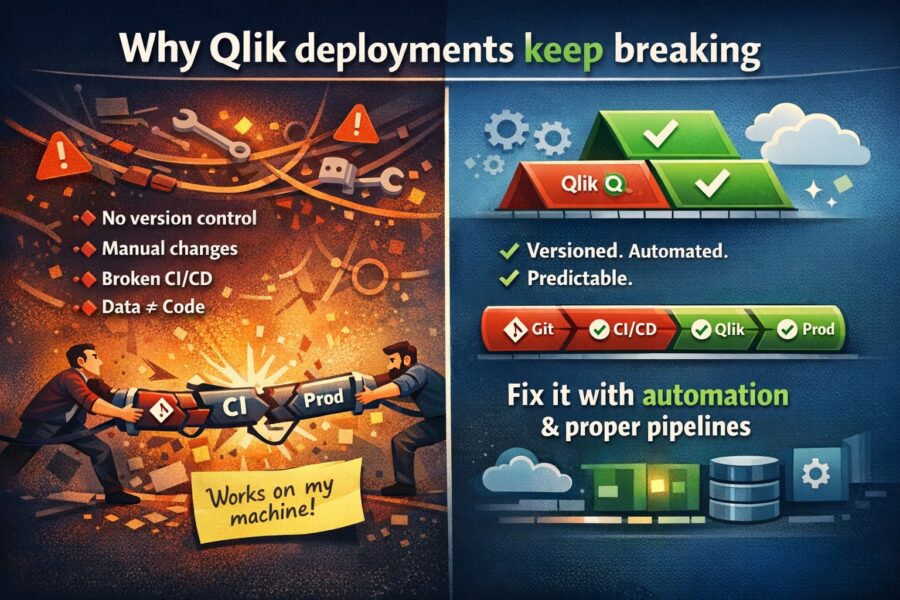
Every Qlik team has a deployment horror story. Maybe it was the app launch load script bug that decided to release an app to production with a broken ...


Any company, no matter the size, needs a data strategy. Only data can provide a business with answers to all questions, thereby improving operations and increasing profits. However, an ineffective strategy makes it impossible for a company to tap its full potential. Here are 6 the most common mistakes in data strategy development process.
The world is rapidly transforming. The business strategy must fully comply with the requirements of the 4th industrial revolution. The data strategy, in turn, must support the business strategy and be relevant in the modern world. Investing in an outdated strategy is pointless. This not only does not work, but also leads to inappropriate costs.
Not all existing methods of data analysis are important and effective in achieving the business goal of a particular company. Many companies develop a data processing strategy based on interesting cases. However, they do not take their own interests into account. It is important to define goals and objectives, figure out how the data can be used to achieve them, and only then begin to develop a strategy.
How can you determine how successful or unsuccessful a strategy is? – determine the KPI. Only by defining the key performance indicators, it is possible to correctly track and analyze the progress. Any data initiative must have a business case with appropriate KPIs.
Implementing a data processing strategy entails technical costs. However, do not forget that changes will be required in the corporate culture. Each team member must rely on data every time he makes a decision. To do this, it is necessary to organize a training process for collecting correct data, assessing their quality and analyzing.
At the moment, data comes in different forms – photographs, sound recordings, text files, and much more. The data strategy must take into account structured and unstructured data to get the correct information. Don’t ignore external data sources from repositories, governments and data brokers as it can be useful.
Any data project should start by defining aspects of the ethical and confidential data usage. Consumers must be confident in the confidentiality of their data usage, and also benefit from it.
The correct data strategy is a key element in the process of achieving business goals. It should be based on 3 to 5 use cases. The use cases for each business will be different, however, they should be consistent with the business strategy.
Every Qlik team has a deployment horror story. Maybe it was the app launch load script bug that decided to release an app to production with a broken ...
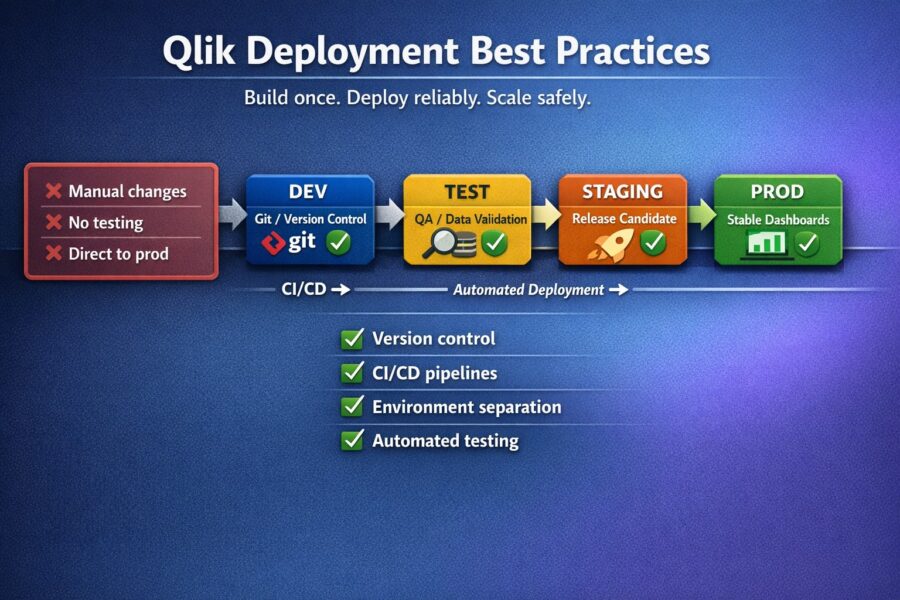
Are you the type of person who deploys Qlik apps by simply exporting a QVF, renaming it, and then importing it to your target environment? If so you&#...

During a briefing on the Iraq War, Donald Rumsfeld divided information into 4 categories: known known, known unknown, unknown known, unknown unknown. ...


No comments yet.
Leave a comment