
Why Your Qlik Deployments Keep Breaking
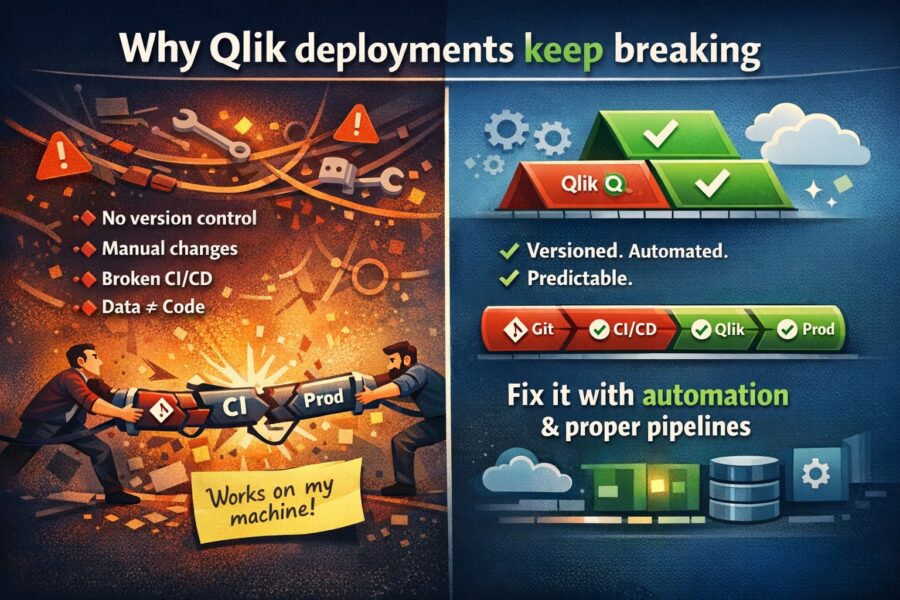
Every Qlik team has a deployment horror story. Maybe it was the app launch load script bug that decided to release an app to production with a broken ...


A dashboard is an indispensable business tool for working with data. It is a visual report with all the data. The main such report goal is to help the user to make effective business decisions by visualizing KPIs (charts, graphs, maps, etc.), monitoring performance, interacting with data to analyze trends and obtain the necessary information. Clear visualization in the form of charts or graphs provides an easy workflow and data understanding. Modern reports also extract data from several sources and allow to explore, analyze data and get a complete understanding of the current situation. Some dashboards include AI-driven recommendations, big data scalability, built-in visualizations, and a managed self-service.
There is a fundamental difference between regular reports and a dashboard. A modern interactive dashboard is a data visualization that allows to interact with data, explore it, understand what changes are happening or have happened and determine causes. A static report is a visualization of historical data. Such reports can only tell what happened in the past. They are used on a regular basis (daily, weekly, monthly, etc.).
Dashboard types:
You can read more about the types of dashboards here
Dashboards can be useful for companies from any industry, as well as for any profession.
Dashboard usage depending on the business industry:
Dashboard usage depending on professional duties and company departments:
The main dashboard advantages:
Recommendations for creating a dashboard:
Every Qlik team has a deployment horror story. Maybe it was the app launch load script bug that decided to release an app to production with a broken ...
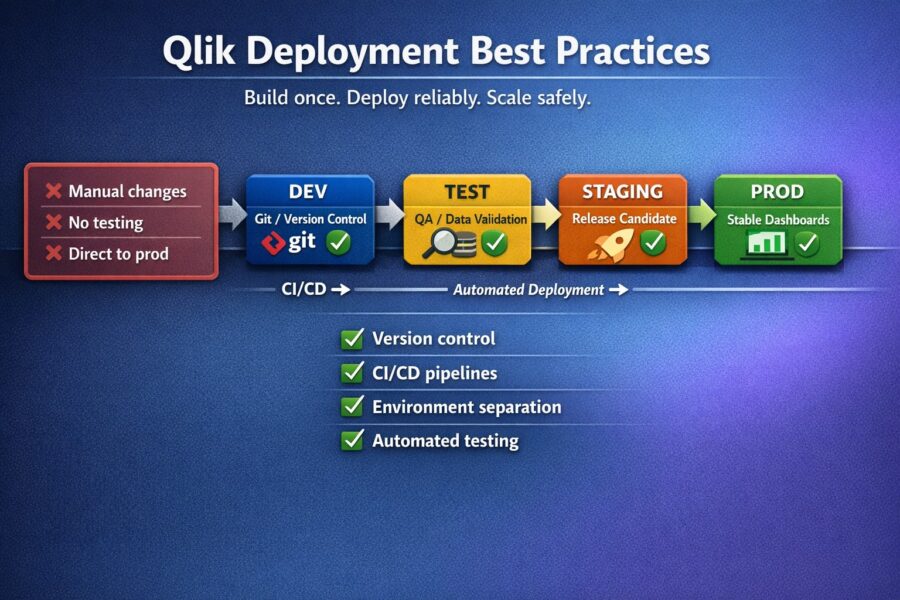
Are you the type of person who deploys Qlik apps by simply exporting a QVF, renaming it, and then importing it to your target environment? If so you&#...

During a briefing on the Iraq War, Donald Rumsfeld divided information into 4 categories: known known, known unknown, unknown known, unknown unknown. ...


No comments yet.
Leave a comment